Water Extraction Removes Standing Water Using Truck-Mounted and Portable Units
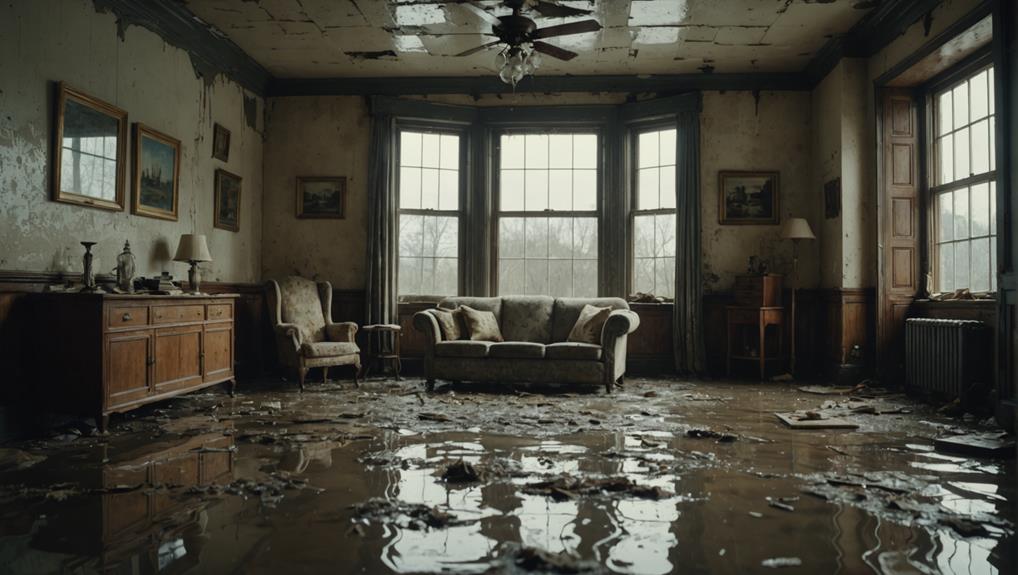
Standing water inside an Auburn GA property triggers a cascade of progressive damage that accelerates with every passing hour. Saturated drywall begins wicking moisture upward at rates exceeding one inch per hour, subflooring delaminates as adhesive bonds fail, and microbial colonization initiates within 24 to 48 hours in Barrow County's warm, humid conditions. Professional water extraction addresses these threats by deploying truck-mounted pumping systems capable of removing thousands of gallons per hour, combined with portable weighted extractors that pull residual moisture from carpet padding, hardwood seams, and concrete pore structures. The restoration process begins the moment our technicians cross your threshold, with extraction crews establishing hose runs from affected areas to exterior discharge points while assessment technicians simultaneously document damage scope using calibrated Tramex moisture meters.
Category 1 Clean Water Extraction Addresses Supply Lines and Appliance Overflows
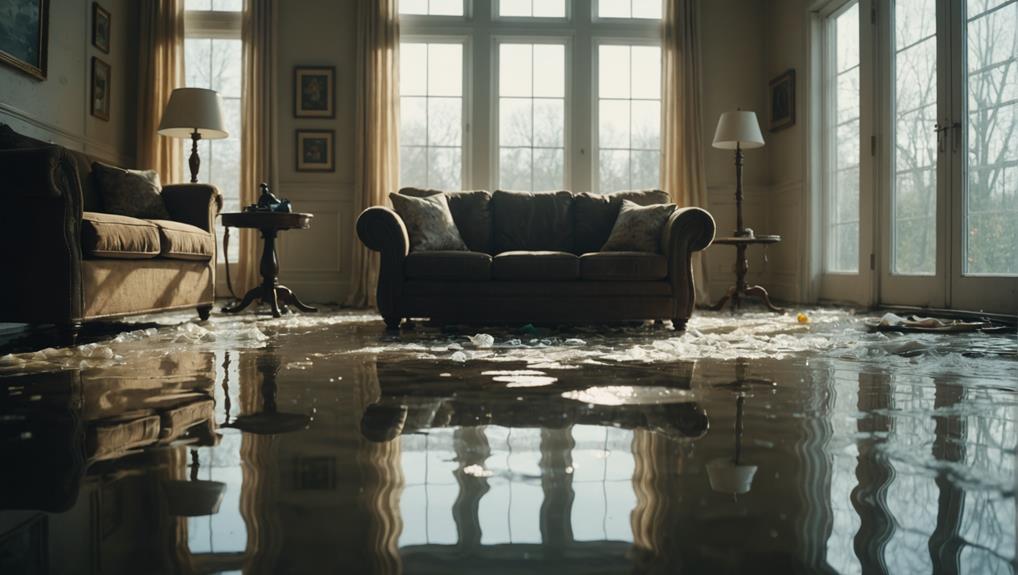
Category 1 water originates from sanitary sources including broken supply lines, sink overflows, appliance malfunctions, and rainwater intrusion through compromised roofing. While clean water presents the lowest health risk among the three IICRC-defined categories, it demands rapid extraction because dwell time converts Category 1 into Category 2 within 48 hours as stagnant water contacts materials harboring bacteria and organic matter. Our technicians extract Category 1 water using weighted carpet extractors that pull moisture through the carpet face, pad, and into collection tanks. For hard-surface flooding in Auburn kitchens or bathrooms, we deploy truck-mounted vacuum systems that clear standing water from tile, vinyl, and hardwood surfaces efficiently. Following extraction, technicians verify remaining moisture content in subflooring, baseboards, and wall cavities using pin-type and pinless moisture meters.
Category 2 Gray Water Requires Antimicrobial Treatment Per IICRC S500
Category 2 gray water contains measurable levels of chemical or biological contaminants that pose health risks through ingestion or skin contact. Common sources in Auburn GA homes include dishwasher discharge failures, washing machine overflows, sump pump backups, and aquarium ruptures. ANSI/IICRC S500 protocols mandate appropriate personal protective equipment during Category 2 extraction and EPA-registered antimicrobial treatments on all contacted surfaces. Our crews remove and discard saturated porous materials including carpet padding, cellulose insulation, and particleboard that cannot be adequately decontaminated. Non-porous materials such as concrete and plywood subflooring receive thorough cleaning with quaternary ammonium compounds followed by antimicrobial spray application. Understanding the cost implications of different water categories helps Auburn homeowners prepare for the scope of restoration required.
Category 3 Black Water Demands Full PPE and EPA-Approved Biocide Application
Category 3 black water represents the most hazardous classification, containing pathogenic organisms, raw sewage, or chemical waste that creates immediate health risks for occupants and restoration personnel. Sources include sanitary sewer backups, rising floodwater that has contacted exterior soil and debris, and toilet overflows containing fecal matter. IICRC S500 mandates full PPE including Tyvek suits, N95 or higher respirators, chemical-resistant gloves, and eye protection. Our crews apply EPA-approved biocide solutions to all contacted surfaces before beginning extraction to reduce pathogen counts. Every porous material contacted by Category 3 water requires removal and disposal regardless of apparent condition, including carpet and pad, drywall up to two feet above the visible water line, cellulose insulation, and upholstered furniture. Structural framing and concrete receive multiple applications of antimicrobial treatments followed by verification swab testing before rebuilding begins. Auburn properties along the Mulberry River corridor and lower-elevation areas near Highway 8 face elevated Category 3 risk during storm events when municipal sewer systems experience surcharge conditions.
Structural Drying Uses Dri-Eaz LGR 2800i Dehumidifiers and Sahara Pro X3 Air Movers
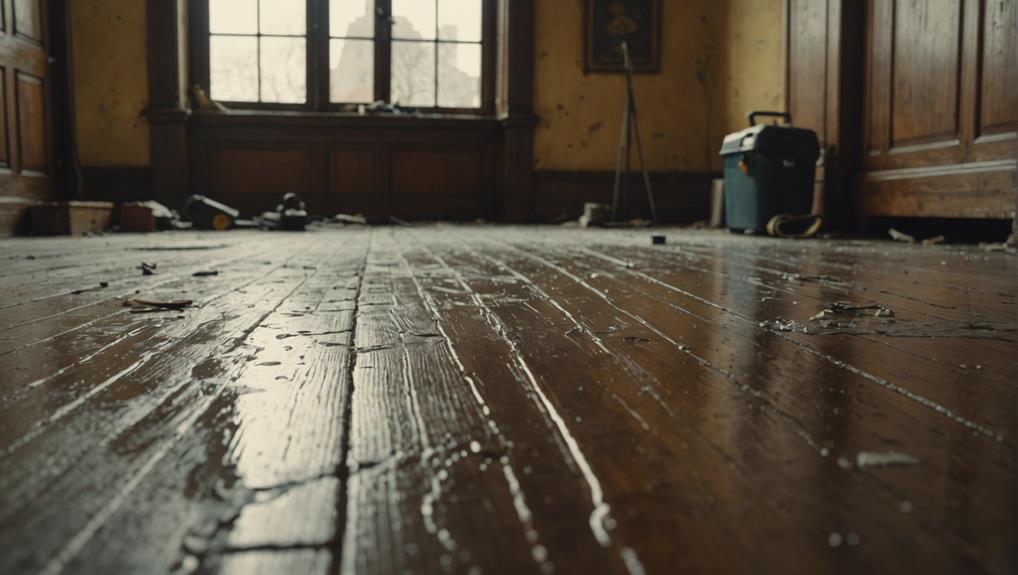
Effective structural drying transforms a water-damaged Auburn GA property from a saturated, damage-progressing environment into a controlled drying chamber where moisture migrates from building materials into conditioned air at predictable, measurable rates. The process relies on the fundamental relationship between temperature, relative humidity, and vapor pressure. Our technicians deploy Dri-Eaz LGR 2800i low-grain refrigerant dehumidifiers that remove up to 130 pints of water per day from the air column, paired with Sahara Pro X3 air movers generating 3,000 cubic feet per minute of focused airflow across wet surfaces. This combination creates an aggressive drying environment where evaporation rates from saturated drywall, framing, and subflooring exceed the rate at which remaining moisture migrates toward the surface. The complete drying process typically requires three to five days for standard residential losses, though Auburn's older properties with plaster walls, hardwood subflooring over pier-and-beam construction, and limited attic ventilation often require extended drying periods with additional equipment.
Psychrometric Calculations Determine Equipment Placement for Auburn Properties
Psychrometric science governs every drying decision our technicians make on Auburn GA restoration projects. Before placing equipment, lead technicians calculate the specific humidity, grain depression, and dew point for each affected space using temperature and relative humidity readings at multiple points. These calculations determine the exact number of dehumidifiers and air movers required, their optimal placement, and the expected drying timeline. A 1,200-square-foot Auburn ranch home with water-damaged carpet over plywood subflooring requires a fundamentally different equipment configuration than a 3,000-square-foot two-story home with hardwood floors over concrete slab. Technicians calculate moisture volume in affected materials by comparing current readings against established dry standards, then determine the grain depression needed to maintain target evaporation rates. This systematic approach prevents both under-drying, which leaves hidden moisture promoting mold growth, and over-drying, which causes hardwood cupping and drywall cracking.
Tramex Moisture Encounter Plus Monitors Drying Behind Walls and Under Flooring
Daily moisture monitoring separates professional structural drying from inadequate fan-and-dehumidifier approaches that homeowners sometimes attempt on their own. Our technicians use the Tramex Moisture Encounter Plus, a non-invasive capacitance meter that reads moisture levels through surface materials without requiring penetration holes. This allows monitoring inside wall cavities, beneath vinyl and tile flooring, and within ceiling assemblies without creating additional damage. Technicians document readings at numbered monitoring points, creating a progression chart showing moisture reduction rates for each area. When readings plateau or reverse, technicians adjust equipment placement or introduce additional dehumidification capacity. Pin-type meters supplement non-invasive readings where precise moisture content percentages are needed, particularly when determining whether materials have reached dry standard thresholds allowing rebuilding to proceed.
Flir E8 Thermal Imaging Reveals Hidden Moisture Pockets
The Flir E8 infrared thermal imaging camera provides immediate visual identification of moisture patterns invisible to the naked eye. Wet building materials exhibit lower surface temperatures than surrounding dry materials due to evaporative cooling, and the Flir E8 displays these differentials as distinct color patterns on its high-resolution screen. Technicians scan every wall, ceiling, and floor surface during the initial assessment to map the full extent of water migration, which frequently extends beyond visually obvious damage. In Auburn GA properties, thermal imaging routinely reveals moisture traveling through wall cavities into second-floor spaces, migrating along floor joists into adjacent rooms, or wicking into attic insulation through ceiling penetrations. These hidden moisture pockets represent the most common cause of post-restoration mold growth. Our technicians repeat thermal scans daily throughout the drying process to verify all identified moisture pockets respond to the drying configuration.
Mold Prevention Begins Within 24 Hours in Auburn's Humid Subtropical Climate
Auburn GA's location in the southeastern Piedmont region means outdoor relative humidity regularly exceeds 80 percent during summer months, creating conditions where mold colonization on water-damaged materials can begin in as few as 24 hours. Genera including Aspergillus, Penicillium, Cladosporium, and the particularly concerning Stachybotrys chartarum require only organic material, moisture, and moderate temperatures to establish viable colonies. Every building material in a typical Auburn home, including paper-faced drywall, dimensional lumber, carpet fibers, ceiling tiles, and even the dust layer on concrete surfaces, provides sufficient organic substrate for mold growth when moisture conditions allow. Our mold prevention protocols activate concurrently with water extraction rather than waiting for drying to complete. Technicians apply EPA-registered antimicrobial treatments to all surfaces contacted by water, establish controlled drying conditions that reduce relative humidity below the 60 percent threshold required for germination, and maintain those conditions continuously until moisture meter readings confirm all materials have reached dry standard. This proactive approach prevents mold colonies from establishing during the restoration period, eliminating the need for costly mold remediation as a separate project.
IICRC S520 Standard Governs Containment and HEPA Filtration
When pre-existing mold is discovered or when Category 2 and Category 3 water events create elevated contamination risk, our technicians implement containment protocols specified in the IICRC S520 Standard and Reference Guide for Professional Mold Remediation. Containment involves constructing polyethylene barriers sealed with tape to isolate affected areas from unaffected portions of the Auburn property. Negative air pressure is established using HEPA-filtered air scrubbers that prevent cross-contamination of spores into clean areas. The S520 standard specifies three containment levels: Level I for small isolated areas under 10 square feet, Level II for areas between 10 and 100 square feet requiring full polyethylene containment with negative air, and Level III for areas exceeding 100 square feet or confirmed Stachybotrys requiring full containment, decontamination chambers, and third-party air clearance testing. Our technicians carry HEPA-rated vacuums, polyethylene sheeting, and air scrubbers on every Auburn response to ensure immediate containment capability.
Antimicrobial Treatments Prevent Colony Formation on Wet Materials
Professional antimicrobial application provides a chemical barrier preventing mold spores from germinating on treated surfaces during the drying period. Our technicians apply EPA-registered antimicrobial products using airless sprayers that deliver consistent coverage at manufacturer-specified rates. Treatment begins immediately following extraction and continues as structural materials are exposed during controlled demolition. Surfaces receiving treatment include all exposed framing lumber, subfloor surfaces, concrete slab, remaining drywall, and content items designated for on-site cleaning. The antimicrobial formulations provide both immediate bactericidal and fungicidal action along with residual protection persisting through the multi-day drying period. This residual protection proves particularly valuable in Auburn's climate where outdoor humidity introduces moisture vapor through building envelope penetrations even while mechanical drying systems operate. Before rebuilding begins, technicians apply a final antimicrobial treatment to all surfaces that will be enclosed behind new drywall, flooring, or ceiling materials.
Complete Property Restoration Returns Auburn Homes to Pre-Damage Condition
Restoration represents the final phase of water damage recovery, beginning only after structural drying verification confirms all building materials have reached acceptable moisture content levels. This phase transforms the stripped, dried structure back into a livable Auburn home through systematic reconstruction addressing every component damaged or removed during mitigation. Our restoration crews include licensed carpenters, drywall finishers, flooring installers, painters, and trim specialists working from detailed documentation created during the initial damage assessment. The transition from mitigation to restoration often represents the point where restoration costs become most visible to Auburn homeowners because reconstruction involves tangible materials and visible progress rather than behind-the-scenes moisture management.
Structural Repairs Address Drywall, Flooring, and Framing
Structural repair begins with framing assessment and replacement where moisture-related deterioration has compromised dimensional lumber. Sill plates, floor joists, wall studs, and header beams showing elevated moisture content, fungal decay, or physical damage are replaced with pressure-treated or kiln-dried lumber matching original specifications. Subfloor replacement follows with tongue-and-groove plywood or oriented strand board restoring the structural floor deck. Drywall installation proceeds from the ceiling down, with moisture-resistant greenboard or DensArmor Plus panels specified for bathrooms, kitchens, and laundry rooms. Finish flooring addresses the specific material present before the loss, whether hardwood requiring acclimation to Auburn's conditions, carpet and pad, luxury vinyl plank, or ceramic tile. Crews complete reconstruction with trim carpentry, texture matching, and painting to blend repaired areas with undamaged portions of the home.
Content Cleaning and Pack-Out Services Protect Belongings
Content cleaning and pack-out services protect Auburn homeowners' personal property during the restoration process while recovering salvageable items that would otherwise be written off as total losses. Our content division inventories all affected belongings using detailed photography and written descriptions before categorizing each item as restorable, non-restorable, or requiring specialist treatment. Restorable items are packed in numbered boxes cross-referenced to the inventory list, transported to our climate-controlled cleaning facility, and processed using appropriate methods for each material type. Textiles undergo commercial laundering or dry cleaning with antimicrobial additives. Hard goods receive ultrasonic cleaning that removes contamination from surface textures and crevices. Electronics are evaluated for restorability before cleaning resources are invested. Documents, photographs, and paper items receive freeze-drying treatment that halts deterioration without ink bleeding or distortion. Cleaned contents remain in secure storage until the Auburn property restoration reaches the point where items can be returned to their original locations.
24/7 Emergency Response Covers Auburn GA and Surrounding Barrow County
Water damage events do not respect business hours, weekends, or holidays. A supply line failure at 2:00 AM Saturday floods an Auburn master bedroom. A water heater ruptures during a Wednesday afternoon thunderstorm. A dishwasher supply hose bursts while a family vacations for a week. Each scenario demands immediate professional response to minimize damage progression and restoration costs. Our dispatch center operates 24 hours per day, 365 days per year, with certified restoration technicians on standby throughout Auburn GA (zip code 30011) and surrounding Barrow County communities. When you call (888) 450-0858, a restoration coordinator gathers essential information about your emergency, dispatches the nearest available crew, and provides immediate guidance on safe actions you can take while our team travels to your Auburn GA property.
Our crews maintain response capability throughout the greater Auburn GA service area including the following communities and surrounding areas:
- Auburn (30011)
- Winder
- Dacula
- Braselton
- Carl
- Statham
- Bethlehem
Strategic positioning along the GA Highway 11 corridor and Highway 8 allows our crews to reach properties throughout Auburn and the broader Barrow County service area within our 60-minute response window. Properties near the Mulberry River area receive priority dispatch during heavy rainfall events when rising water tables and storm runoff create elevated flooding risk for homes in lower elevation zones. Our familiarity with Auburn's road network, subdivision layouts, and common property construction types allows technicians to arrive prepared with the specific equipment configurations most likely needed for each neighborhood's predominant building styles and common water damage patterns.
Every emergency response begins with a systematic damage assessment documenting affected areas, identifying the water source and category, and measuring moisture content in all contacted materials. This assessment serves as the foundation for insurance documentation, equipment planning, and cost estimation. Auburn homeowners receive a detailed written scope within 24 hours of the initial response, providing transparency about the restoration process, timeline, and anticipated costs before major work begins.
Water Damage Emergency in Auburn GA?
Our IICRC-certified technicians respond within 60 minutes with truck-mounted extraction equipment and industrial drying systems. Available 24 hours a day, 7 days a week throughout Barrow County.
(888) 450-0858Call now for immediate emergency response.
Frequently Asked Questions About Water Damage Restoration in Auburn GA
Our IICRC-certified technicians maintain a 60-minute response time throughout Auburn GA and surrounding Barrow County. Dispatched crews arrive with truck-mounted extraction units, portable pumps, and Tramex moisture meters to begin immediate assessment and water removal following ANSI/IICRC S500 protocols. Our dispatch center operates 24 hours a day, 365 days per year, so emergency response is available regardless of when the water damage occurs.
Category 1 involves clean water from supply lines or appliance overflows posing no immediate health risk. Category 2 gray water contains chemical or biological contaminants from dishwashers, washing machines, or sump pump failures requiring antimicrobial treatment per IICRC S500. Category 3 black water from sewage backups or floodwater demands full PPE, EPA-approved biocide application, and removal of all porous materials. The category classification directly affects restoration scope, cost, and timeline.
We deploy Dri-Eaz LGR 2800i low-grain refrigerant dehumidifiers capable of removing 130 pints per day, paired with Sahara Pro X3 air movers producing 3,000 CFM airflow. Technicians use Tramex Moisture Encounter Plus meters for non-invasive moisture monitoring and Flir E8 thermal imaging cameras to detect hidden moisture behind walls and under flooring. Equipment placement is determined by psychrometric calculations specific to each Auburn property's size, construction type, and damage extent.
Mold prevention begins within 24 hours of water intrusion. Our technicians apply EPA-registered antimicrobial treatments to all affected surfaces, establish HEPA-filtered negative air containment per IICRC S520 standards, and reduce ambient moisture below 60 percent relative humidity using commercial dehumidifiers. Auburn's humid subtropical climate accelerates mold colonization, making rapid structural drying critical to preventing Aspergillus, Penicillium, and Stachybotrys growth on organic building materials.
Yes, our complete property restoration services address all structural repairs including drywall replacement, hardwood and carpet flooring installation, framing reconstruction, and trim carpentry. We also provide content cleaning and pack-out services to protect belongings during restoration. The goal is returning your Auburn home to pre-damage condition with documented moisture readings confirming all materials meet dry standard thresholds before reconstruction begins.